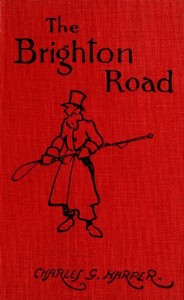
The Brighton Road: The Classic Highway to the South by Charles G. Harper
You know how when you drive down a motorway, you barely think about the ground beneath your tires? But back when the Brighton Road was first carved out—and for a couple hundred years after—every inch told a story. Charles G. Harper didn't just write a history book. He wrote a love letter to this classic highway, treating it like a living character with its own pulse.
The Story
Harper walks (and later rides) the road from London to Brighton, starting at the famous Elephants and Castle pub in Southwark. He uses old guides, personal observations, and loads of dry humor to trace the route as it once was. You’ll hear about magnificent coaching inns where horses were changed every ten miles, the hardy stagecoach drivers who became celebrities, and the occasional robber who gave passengers a scare. Royalty comes through—Princess (later Queen) Victoria trotted down this road. So do ordinary citizens heading to the sea for a weekend of fresh air. But it's not all romantic glory: Harper points to the expensive toll roads, the monotonous driving through dusty lanes, and the ultimate villain—the railroad—that stole the sheer human drama of the road. Along the way, towns like Croydon, Reigate, Crawley, and Pyecombe get their mini-biographies. It's 200 miles of social, transport, and local history, stitched together in one long, winding journey.
.Why You Should Read It
At first glance, you might go Do I really care about an old road? But Harper’s talent is making you care. His voice is hands-on, fond of tiny details: what signs hung outside what pubs, how much a coach cost, what grew in the hedgerows. Reading this book, you get this tiny feeling that you’re traveling with him. You also taste some serious nostalgia for a lost craft—stagecoaching basically died a swift death after trains arrived. And Harper captures that “end of an era” sadness without being sentimental. He also doesn’t shy away from the gritty parts: jolting seats, fleas at the inn, and drunken drivers. It is history from ground level, which counts as the most readable kind.
Final Verdict
This book is perfect for history buffs who don’t fancy a dry textbook. If you love background color over charts, The Brighton Road serves it beautifully. Highly recommended for English social historians, walking enthusiasts who may still hang out around Southwark, steam engine nerds curious about what coach travel was like before them, and anyone looking for a cosy, highly personal travel diary dating from 1900. It’s a gem for train browsers too—you can leaf in, find a stolen nugget about an ancient tollgate, and hop out. But die-hard transport fans or curmudgeons who despise digressive Victorian chat will want to give the road a miss.
This historical work is free of copyright protections. Access is open to everyone around the world.